.png)

Our plants
We specialise in edible plants - with a focus on perennial and unusual varieties you may not have heard of (plus some you probably have heard of!).
Current stock is available to buy on our eBay store: HERE
All our plants are grown using organic methods by us in East Sussex and supplied to you without plastic.
Fruits
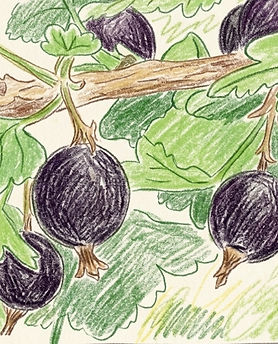
Jostaberry
-
Hybrid berry - gooseberry and blackcurrant cross.
-
Very vigorous and fully hardy. Grows up to 1.5m tall and wide. Prune in winter to maintain shape and trim new growth in summer. Happy on any soil type.
-
Produces masses of fruit in July which taste somewhere in between gooseberry and blackcurrant.
-
Great for cooking (pies, jams, crumbles etc.)

Chilean Guava
-
Queen Victoria's favourite fruit!
-
Evergreen shrub - part of the myrtle family.
-
Hardy. Grows to 1m tall and wide. Happy on any soil type.
-
Delicious, sweet berries (tasting of pineapple and strawberry) which ripen late in the year when other harvests are over.
-
Best eaten straight off the plant.

Gooseberry
-
Variety: Hinnonmaki Red.
-
Very reliable variety for UK growers.
-
Delicious berries in July - good for eating straight off the plant.
-
Grows up to 1m tall and wide. Prune in winter to maintain shape. Happy on any soil type.
-
Thorny but worth it!

Honeyberry
-
Part of the honeysuckle family.
-
Produces cylindrical berries - dark purple, almost black in colour.
-
Similar taste to blueberries and very high in antioxidants and vitamin C.
-
Produces fruit in early summer.
-
Grows up to 1m tall and wide. Prune in winter to maintain shape. Happy on any soil type.

Fig - Brown Turkey
-
The most reliable fig variety for UK growers.
-
Fully hardy - needs no protection from frost.
-
Fruits ripen in August - September.
-
Best grown in a large pot - as restricting its root growth encourages fruit production.
-
Beautiful plant for foliage as well.

Tayberry
-
Hybrid berry - blackberry and raspberry cross. Named after the river Tay in Scotland.
-
Sends out long vine-like canes which fruit in their second year.
-
Large, juicy berries (deep red, almost purple in colour) ripen late July-early August.
-
Needs a bit of space and support (don't we all?) - allow at least 1m around each plant.
-
Very prolific once established and highly recommended.

Rhubarb
-
Variety: Victoria.
-
Tried and tested variety for UK growers.
-
Good balance of sweetness and acidity.
-
Harvest from early spring to late summer
-
Heavy-cropping and low-maintenance.
-
Likes a heavy mulch around the crown - woodchip works well for this.

Strawberry
-
Variety: Albion.
-
An everbearer variety - which produces fruit steadily from June through to October (unlike non-everbearer varieties which fruit for just a few weeks in June or July).
-
Delicious, deep-red fruits. Considered among the very tastiest of strawberry varieties.
-
Space 50cm apart.
-
Grows on any soil.
Perennial vegetables

Perennial kale
-
Variety: Taunton Deane
-
Amazing plant which can provide you with sweet, nutritious greens 365 days of the year (and for many years!).
-
Cook larger leaves as you would any kale. Younger, more tender leaves can be used as salad greens.
-
Highly recommended - especially if you keep chickens or other animals which enjoy leafy greens.

Perennial broccoli
-
Variety: Nine Star
-
Unlike other broccolis, this variety will live for multiple years (starting to lose vigour after 3 or 4 years).
-
Produces yellow & green stems which taste like broccoli & cauliflower combined.
-
May partially die back in winter.
-
A perennial vegetable gardening staple.

Asparagus
-
Variety: Connovers Colossal.
-
Traditional / heirloom variety which dates back to the 1800's.
-
Stems are large and thick, and have an excellent flavour.
-
Harvest for 8 weeks only - typically from mid-April to mid-June. Then allow stems to grow tall before they die back in late autumn/early winter.
-
Will crop for 15-20 years once established.
Current status: AVAILABLE AGAIN SOON

Caucasian Spinach
-
Commonly grown in Scandinavian edible gardens, but less well-known in the UK.
-
Can be eaten raw or cooked (like spinach!)
-
Young shoots and flowers can also be eaten.
-
Support growth with canes, a trellis or some other structure.
-
Happy in shade, likes moist soil.
-
Will die back in winter, returning to growth in the spring.

Good King Henry
-
Native to the UK (and central & southern Europe) - and has been used as a culinary green for hundreds of years.
-
Harvest young leaves in spring and early summer - cook like spinach.
-
Young flower stems can also be eaten.
-
Will die back in winter, returning to growth in spring.
Tree Cabbage
-
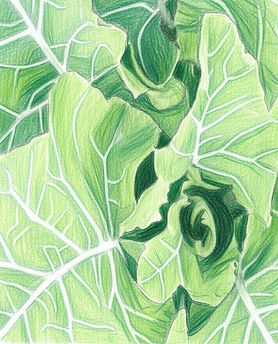
Spanish heirloom variety - a very interesting plant!
-
Produces large leaves all year round.
-
Harvest individual leaves (as you would harvest kale) rather than removing the whole head (as you might usually harvest a cabbage).
-
Can be kept alive for years by removing flowering stems when they appear.
-
Grows tall.
Herbs and other things

Russian Comfrey
-
Also known as 'Bocking 14'.
-
Comfrey has a long taproot which reaches nutrients other plants can't access.
-
Cut the leaves and stems down and allow to rot down in water to make a rich compost tea to fertilise your garden (or add the leaves to your compost heap.
-
This variety is prized by growers as its seeds are sterile - meaning it doesn't spread.
-
A must-have for veg growers.

Chamomile (Roman)
-
Grows to 45cm in height with a proliferation of cheerful yellow and white flowers.
-
The flowers are edible - commonly used for making a relaxing tea. Leaves are also edible but can be bitter and unpleasant.
-
Hardy perennial which will die back fully/partially in winter before returning in spring.

Mints
-
We offer a range of mints - including standard Garden Mint as well as more unusual varieties such as Pineapple, Chocolate, Basil, Ginger, Blackcurrant and Strawberry Mints.
-
Use for cooking, tea making, in cocktails, or just to sniff!

Lavender
-
Variety: Munstead
-
Well-loved and reliable variety which grows into a compact shape (45cm high).
-
Wonderful fragrance, which the bees also love!
-
Has relaxing properties and can be used in herbal teas.

Liquorice
-
Patient growers can harvest the roots of the liquorice plant in autumn once it has reached maturity (after 2 or 3 years).
-
Grows to about 1m to 1.2m tall and is an interesting looking plant - with unusual leaves and blue/violet flowers.
-
Dies back in winter before returning in spring.
-
Be sure to read medical guidelines before consuming (especially if you are pregnant!)

Culinary herbs
-
We grow a wide range of culinary herbs to enhance your meals - including Thyme, Oregano, Chives, Rosemary, Sage, Lovage, Lemongrass, Lemon Balm and Fennel.